
Contents
- 1 The Unstoppable Flow: The Ultimate Guide to Conquering Writer’s Block (2026 Edition)
- 1.1 Welcome to Writer’s Block
- 1.2 The Neuroscience of the Block
- 1.3 Diagnosing Your Specific Type of Block
- 1.4 Tactical Solutions (The Quick Fixes)
- 1.5 Changing the Medium (The Analog Shift)
- 1.6 Strategic Solutions (The Long Game)
- 1.7 Tools of the Trade (Tech & AI)
- 1.8 Genre-Specific Blocking
- 1.9 Conclusion: Inspiration is for Amateurs
The Unstoppable Flow: The Ultimate Guide to Conquering Writer’s Block (2026 Edition)
The cursor blinks. It appears, disappears, and appears again—a rhythmic taunt that matches the escalating beat of your heart. The page is white, pristine, and terrifyingly empty. You have the skills. You have the vocabulary. You even have the idea—somewhere, buried deep beneath layers of anxiety and mental fog. But the words won’t come.
Welcome to Writer’s Block

If you are reading this, you are likely in the throes of what feels like a terminal illness of the imagination. Whether you are a novelist stuck on Chapter 7, a copywriter staring at a deadline for a sales page, or a Ph.D. candidate crushed by the weight of a dissertation, the feeling is the same. It is a mixture of panic, self-loathing, and a profound sense of emptiness.
But here is the truth that this guide will prove to you: Writer’s block does not exist.
At least, not in the way you think it does. It is not a mysterious virus that strikes random victims. It is not a sign that you have lost your talent. It is not a verdict from the universe that you should quit.
Writer’s block is a symptom. It is a physiological and psychological signal that something in your creative process is misaligned. It is a “Check Engine” light. And just like a mechanic doesn’t stare at the light and cry, you shouldn’t stare at the cursor and panic. You pop the hood. You diagnose the issue. You fix it.
In this comprehensive guide, we are going to dismantle the myth of writer’s block. We will move beyond the trite advice of “just write anything” and delve into the neuroscience of creativity. We will explore the psychology of perfectionism. We will provide you with a military-grade arsenal of tools, tactics, and strategies used by the world’s most prolific authors, from Stephen King to Seth Godin.
By the end of this journey, you will not just overcome your current block. You will build a system that prevents it from ever returning. You will turn the faucet of creativity into a firehose.
Let’s begin.
The Neuroscience of the Block
To defeat the enemy, you must understand the enemy. Writer’s block feels like a spiritual failing, but it is actually a biological reaction. It is your brain doing exactly what it evolved to do: protect you.
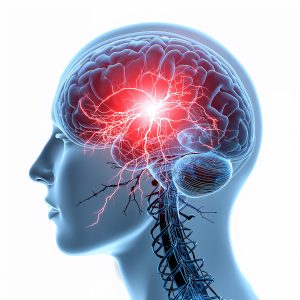
The Amygdala Hijack: Fear vs. Creativity
Deep inside your brain lies the Amygdala, an almond-shaped cluster of nuclei involved in memory and emotional responses, particularly fear. This is the ancient, reptilian part of your brain responsible for the “Fight or Flight” response.
When you sit down to write, especially if the stakes are high (a deadline, a published novel, a thesis), your brain often interprets this pressure not as an intellectual challenge, but as a threat.
According to research cited by Wikipedia: Amygdala, when the amygdala detects a threat, it releases stress hormones like cortisol and adrenaline. These hormones divert blood and energy away from the Prefrontal Cortex—the part of your brain responsible for complex decision-making, planning, and creativity—and towards your muscles (to run away from the saber-toothed tiger).
The Result:
You literally cannot think creatively because your brain has shut down the creative center to focus on survival. This is why “forcing it” often makes it worse. You are trying to perform high-level cognitive gymnastics while your brain is chemically preparing for a fistfight.
💡
Actionable Insight
Recognizing that your block is a fear response is the first step. You are not “uncreative”; you are “chemically anxious.” The solution, therefore, is not to write harder, but to calm the amygdala.
Decision Fatigue and the Prefrontal Cortex
Writing is essentially a series of thousands of micro-decisions.
- What word do I use here?
- Is this sentence too long?
- Does this character sound authentic?
- Is this argument logical?
The Prefrontal Cortex (PFC) handles these decisions. However, the PFC has a limited battery life. Psychologists call this Ego Depletion or Decision Fatigue.
If you sit down to write after a long day of making decisions at your day job, or if you are trying to edit while you write (making decisions about quality simultaneously with decisions about content), you drain the PFC. When the battery hits 0%, the brain simply refuses to make more choices. The result? You stare at the screen, unable to choose the next word.
The Fix
This explains why the advice “write drunk, edit sober” (often misattributed to Hemingway) is scientifically sound. By separating the creation (low decision cost) from the editing (high decision cost), you conserve your neural energy.
Diagnosing Your Specific Type of Block
Not all blocks are created equal. Trying to fix a “Burnout Block” with the strategies for a “Perfectionist Block” is like trying to fix a flat tire by changing the oil. It won’t work. You must identify your variant.<
Diagnose Your Block: The 4 Common Types
1. The Perfectionist’s Paralysis
- ⚠️ Symptoms: You write a sentence, delete it, write it again. Obsessing over the first paragraph for hours.
- 🔍 Root Cause: An overactive “Internal Editor” throttling your creative flow.
- 💊 The Cure: Permission to be Bad. Embrace the “Vomit Draft.” You can’t fix a blank page, but you can fix a bad one.
2. The Imposter Syndrome Block
- ⚠️ Symptoms: Thinking “Who am I to write this?” or “I’m a fraud.” Fear of judgment stops you.
- 🔍 Root Cause: Fear of social rejection (status anxiety).
- 💊 The Cure: Reframing. Realize originality is a myth; execution matters. You are not alone—70% of high achievers feel this.
3. The “Empty Well” (Burnout)
- ⚠️ Symptoms: You have time, but feel drained. No ideas. The world looks gray.
- 🔍 Root Cause: Creative exhaustion. Output exceeded input.
- 💊 The Cure: Stop Writing. Seriously. Go to a museum, read, walk. Refill your subconscious reservoir.
4. The Structural Block (Logic Knot)
- ⚠️ Symptoms: Stuck after 10k words. Don’t know what happens next. Painted into a corner.
- 🔍 Root Cause: Technical/Planning flaw, not psychological.
- 💊 The Cure: Outlining Mode. Stop writing prose. Use a whiteboard or Scrivener to untie the plot knot logically.
Tactical Solutions (The Quick Fixes)
Now that we have diagnosed the problem, let’s look at the immediate “first aid” kits to get the words flowing right now.

The Pomodoro Technique & Time-Boxing
The Pomodoro Technique is a time management method developed by Francesco Cirillo in the late 1980s. It uses a timer to break work into intervals, traditionally 25 minutes in length, separated by short breaks.
Why it works
It lowers the stakes. Writing for 4 hours feels impossible. Writing for 25 minutes feels manageable. It tricks your brain into starting: “I can do anything for 25 minutes.”
Freewriting and “The Vomit Draft”
Freewriting is the practice of writing without stopping, without regard for grammar, spelling, or topic.
The Exercise
Set a timer for 10 minutes. Start writing. If you don’t know what to write, type "I don't know what to write" over and over again until a new thought intrudes. The key is to keep the hand moving.
The Psychology
It disconnects the connection between the brain and the critical editor. It forces the brain into a “flow state” by mechanical necessity. Often, the best ideas come 7 minutes into a freewriting session, once the “surface noise” has been cleared away.
Changing the Medium (The Analog Shift)
If you are staring at a blinking cursor in Microsoft Word and feeling stuck, close the laptop.
Our brains associate screens with distraction—email, news, social media. We also associate word processors with “final, polished work.”
Switch to Pen and Paper.
The physical act of writing by hand engages different neural pathways. It is slower, more deliberate, and more sensual. It lowers the pressure. No one expects a handwritten note to be perfect. Many famous authors, including Neil Gaiman and J.K. Rowling, draft their novels by hand to bypass the digital block.
The “Hemingway Bridge” Method
Ernest Hemingway advised never to finish a writing session by completing a scene. Always stop in the middle of a sentence, or when you know exactly what is going to happen next.
Why it works:
When you sit down to write the next day, you don’t have to invent a new beginning. You already have a “bridge.” You simply finish the sentence and momentum carries you forward. It eliminates the fear of the “cold start.”
Strategic Solutions (The Long Game)
- Building a Ritual: Pavlovian conditioning for writers. How a specific cup of coffee or a music playlist can become a trigger for the brain: “It’s creativity time.”
- Environment Design: Feng Shui for flow. Why cleaning your desk can unblock your mind. The importance of lighting and eliminating visual noise.
- Biological Optimization: Sleep, exercise, and diet. The brain is an organ. If it is exhausted or poisoned by sugar, it will not generate ideas.
Tools of the Trade (Tech & AI)
In 2026, ignoring AI is foolish, but relying on it entirely is dangerous.
- AI as a Sparring Partner: Use ChatGPT or Claude not to write for you, but to get unstuck. “Give me 10 options for what happens in this scene.” “Critique this argument.” It removes the loneliness of writing.
- Focus Software: A review of Scrivener (for structure), OmmWriter (for atmosphere), and internet blockers like Freedom.

Genre-Specific Blocking
- For Fiction Writers: Dealing with plot holes. The “Snowflake Method” vs. the “Gardener Method.”
- For Copywriters: Headline fatigue. Using “Swipe files” for inspiration.
- For Academics: Analysis paralysis. How to write “messy” chapter drafts to assemble a thesis later.
Frequently Asked Questions (FAQ)
Does writer’s block actually exist?
Technically, no. It is not a medical condition. It is a symptom of underlying issues like perfectionism, fear of failure, or burnout. Treating it as a solvable psychological puzzle rather than a mysterious affliction is the first step to beating it.
How do I start writing when I have zero ideas?
Use the “Freewriting” technique. Set a timer for 10 minutes and write anything that comes to mind, even if it’s nonsense. Alternatively, use prompts or AI tools like ChatGPT to generate a list of 10 random ideas to spark your creativity.
Is it cheating to use AI for writer’s block?
No. Using AI for ideation and structure is a smart workflow strategy in 2026. Think of it as a sparring partner. “Cheating” would be having the AI write the final draft for you without your own input or voice.
What is the “Hemingway Bridge”?
It is a strategy where you stop your writing session in the middle of a sentence or scene that you know how to finish. This makes starting the next day much easier because you have immediate momentum.
Why do I get writer’s block only on important projects?
This is due to the “Amygdala Hijack.” Your brain perceives the high stakes (fear of failure) as a threat, releasing stress hormones that inhibit the creative prefrontal cortex. Lowering the stakes by permitting yourself to write a “bad draft” usually solves this.
Conclusion: Inspiration is for Amateurs
Chuck Close once said, “Inspiration is for amateurs. The rest of us just show up and get to work.”
Overcoming writer’s block is not magic. It is a process. It is a set of tools. Now you have the map. You have the keys.
The only thing standing between you and a finished work is the decision to sit down and write one imperfect word. And then another.
Build a productivity system with our complete writing guides. For complex projects – custom academic services from $10/page.
Appendix A: Glossary of Terms
QSVM (Quantum Support Vector Machine)
A quantum version of the classical SVM classifier that uses a quantum feature map to separate complex data in high-dimensional space.
QNN (Quantum Neural Network)
A machine learning model that combines the structure of artificial neural networks with the principles of quantum mechanics (superposition, entanglement).
Quantum Kernel
A mathematical function computed on a quantum computer that measures the similarity between two data points in a high-dimensional quantum state space.
Variational Circuit
A quantum circuit with tunable parameters that are optimized by a classical computer during the training process of a QML model.
Appendix B: Authoritative Resources
Qiskit Machine Learning Documentation
The official guide to using IBM’s QML library, with tutorials on QSVM and QNNs.
PennyLane (Xanadu)
The leading cross-platform Python library for differentiable programming of quantum computers.
TensorFlow Quantum
Google’s library for hybrid quantum-classical machine learning using TensorFlow.

Dr. Evelyn Reed is an expert in research methods and a digital learning specialist. She combines rigorous academic approaches with innovative technologies to create effective educational solutions. Her work focuses on developing and implementing modern digital tools and methodologies that make the processes of learning and conducting research more accessible, structured, and effective.